
- Call Us: +20 155 691 9966
- Email:info@alfolk.net

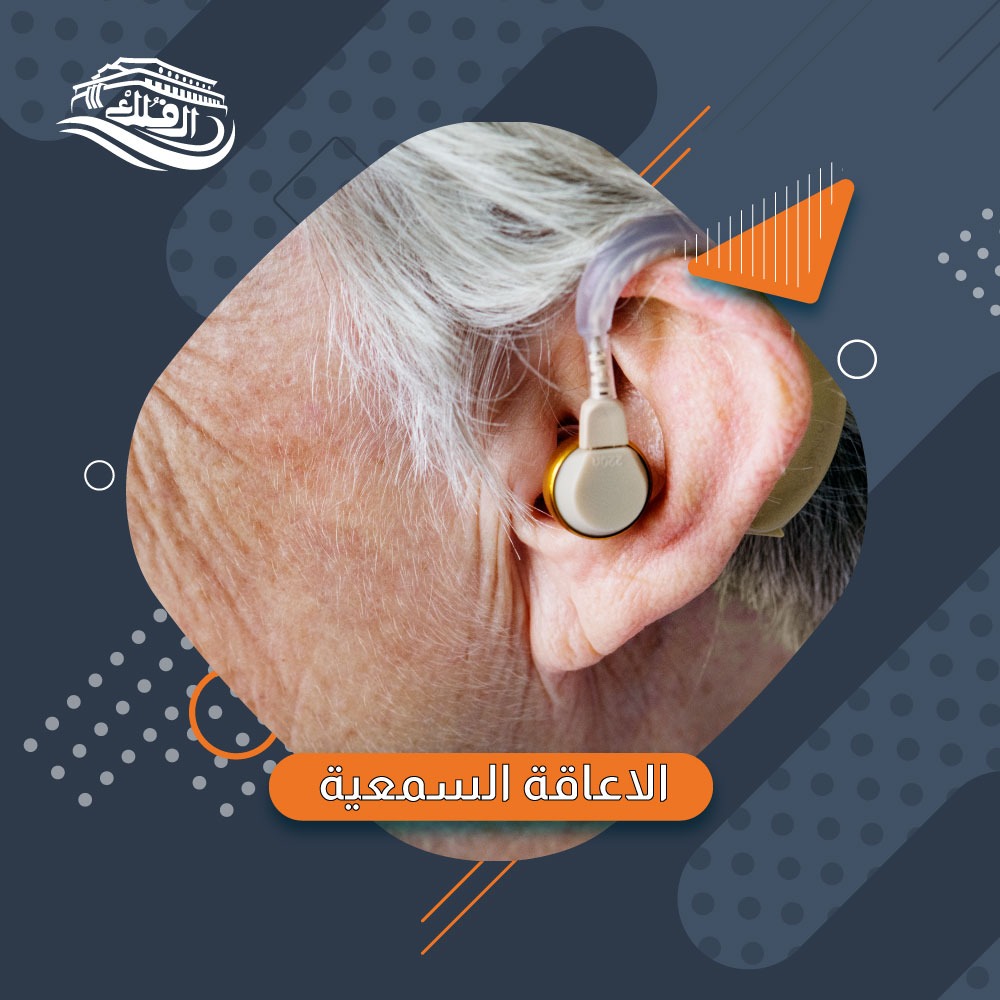
The human ear consists of three parts: 1. The outer ear 2. The middle ear 3. The inner ear
The outer ear is divided into three interconnected parts: 1. Pinna 2. External ear canal 3. Eardrum
How do we hear?
Hearing depends on several complex steps that include converting sound waves in the air into electrical signals carried by the auditory nerve to the brain.
How this process is done??
1- Sound waves enter the outer ear and move through (the ear canal) to the eardrum 2- These vibrations are transmitted to the bones (the hammer, the anvil and the stirrup).
3- The three bones amplify and increase the sound vibrations before transmitting them to the cochlea in the inner ear (the cochlea is a spiral structure with liquid).
4 – Vibrations cause the cochlear fluid to ripple, forming a wave that moves along a membrane, and is controlled by hair cells (which are specialized sensory cells located on top of the membrane
5- The hair cells move up and down and their cilia collide with the structures above them, causing the opening of minute channels at their edges, enabling special chemicals to quickly enter the cells, thus generating an electrical signal.
6- The auditory nerve carries this signal to the brain, which in turn converts it into a sound that can be perceived and understood.
Classification of hearing impairment according to the location:
1- Conductive hearing loss:
Lack of sound delivery to the inner ear (due to problems in the outer ear or the middle ear, such as the presence of earwax, which is the accumulation of the waxy substance in the ear, which needs to be removed. Or the presence of fungal or bacterial infections and among the medicines used for this purpose is ear drops to eliminate fungi, and the patient usually complains of itching due to fungi, and the individual may need an (ear stethoscope).
2- Sensorineural hearing loss: The problem in this case lies in the inner ear and the auditory nerve; they fail to receive sounds or transmit nerve impulses through the auditory nerve to the brain. This type of loss cannot be corrected by medical and surgical procedures, and there is no benefit in amplifying the sound through the stethoscope.
3- Central hearing loss: The problem here lies in the misinterpretation of what a person hears, although his hearing may be normal, but the problem is in the conduction of nerve impulses from the brain stem to the auditory cortex located in the temporal lobe of the brain, due to tumors or brain damage. Hearing aids here are of limited use.
Important tips to follow when talking to people with hearing impairment:
Anyone who deals with a person with a hearing impairment, and in order to help him communicate effectively with those around him, must take into account the following:
1 – To draw the person with a hearing impairment’s attention before starting talking to him.
2 – Making sure that there are no obstacles in front of the speaker’s face.
3- No (chewing gum-cigarettes-food) in the mouth.
4 – To speak clearly and at a moderate speed.
5 – To give signals to a person with a hearing disability when changing the subject of the conversation.
6- Not to speak very loudly (screaming). And avoid talking to him in noisy disturbing backgrounds.
7- Talk to the hard of hearing person as a person, and do not focus on his problems resulting from hearing impairment.
8- The speaker should be patient, positive and relaxed.
9 – In case of doubt about the understanding of the person you are talking to, ask him for instructions to improve communication with him.
10 – Using facial expressions and body language when talking to persons with hearing disabilities.
All rights reserved to Al-Folk Charitable Foundation © 2021
Leave Your Comments